
English| EUR
Suggested for you
More currencies
Choose a language
The Hungarian State Opera House maintains a dress tradition rooted in its 1884 heritage, yet the building welcomes visitors in attire that reflects respect for the performance rather than strict formality. Understanding what fits the occasion—and what stands out for the wrong reasons—helps you focus on the music and architecture instead of second-guessing your outfit at the entrance.
Quick answer
The Hungarian State Opera dress code recommends smart casual as the minimum standard, with evening performances calling for business attire or formal wear. Jeans are tolerated if paired with a blazer or dress shoes, but torn denim, sportswear, and flip-flops are discouraged. Premieres and gala evenings lean heavily formal—cocktail dresses, suits, and ties dominate the stalls and boxes—while matinee performances and guided tours during the day accept relaxed smart casual without raised eyebrows.
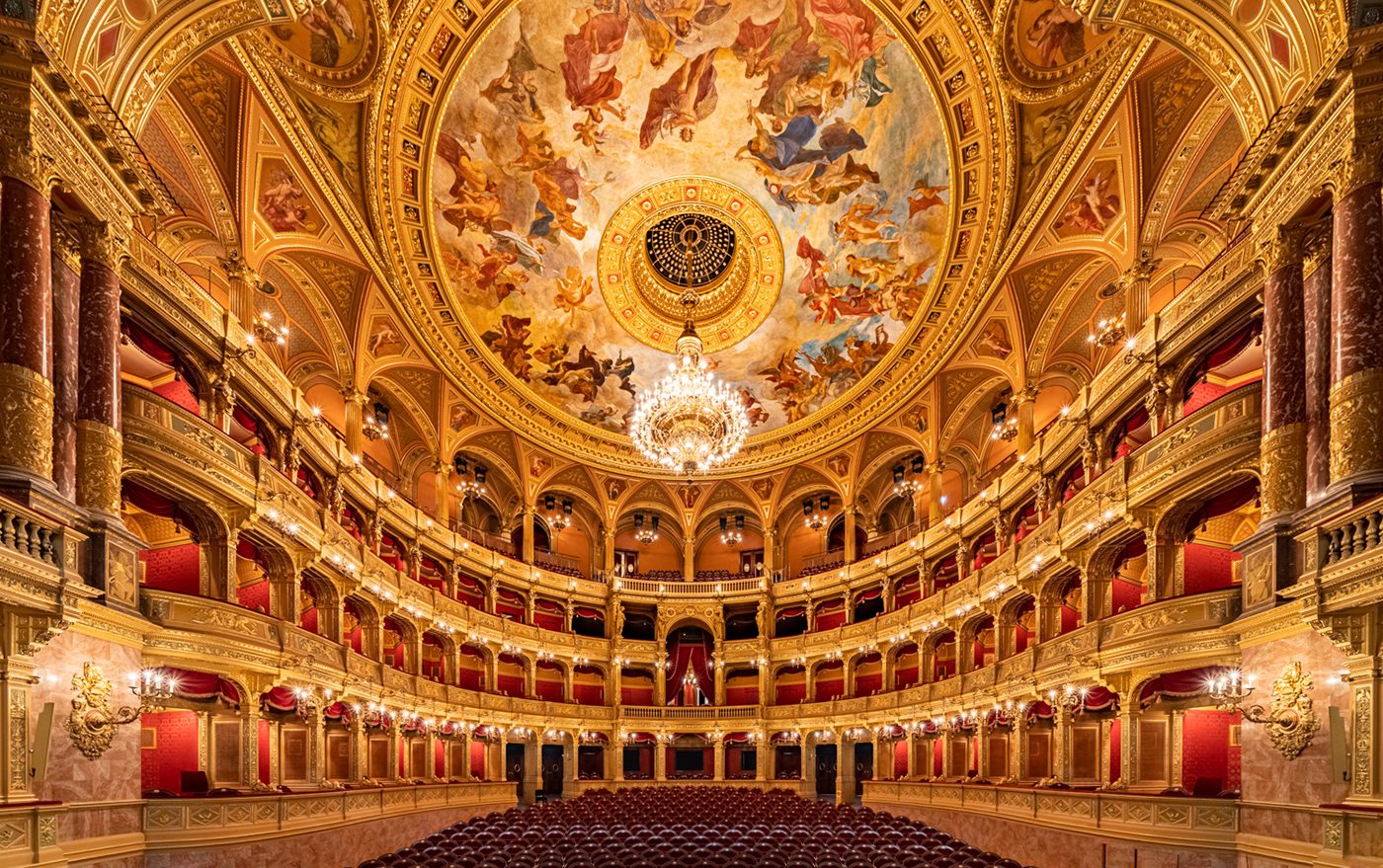
No uniformed attendant will turn you away for wearing dark jeans to a weeknight Puccini, but the Hungarian State Opera House foyer makes its expectations clear the moment you step beneath the frescoed ceiling: this is a room built for ceremony, and most guests honor that. The building's Neo-Renaissance interiors—Bertalan Székely murals, gilt balconies, bronze candelabras—set a tone that athletic shorts and sneakers actively undermine. What constitutes appropriate attire at the opera house depends less on written policy than on the event tier and the cultural weight Budapest audiences assign to opening nights versus midweek repertory. Evening performances draw the widest range of interpretation. A collared shirt and trousers pass without comment in the upper galleries, while the stalls and boxes fill with tailored suits, silk blouses, and leather dress shoes. Women favour knee-length dresses or tailored separates; men arrive in blazers or full suits, often with ties for weekend premieres. The Hungarian State Opera dress code guide, published on the venue's website, stops short of mandates but steers visitors toward "elegant attire befitting the occasion." That phrasing leaves room for smart dark denim in the balcony yet implicitly reserves the orchestra section for those who dressed with intention. Daytime guided tours relax the standard considerably. Visitors arrive in clean casual wear—chinos, modest skirts, closed-toe shoes—because the tour treats the opera house as a museum rather than a live performance space. Sportswear still reads as mismatched against the marble staircases and velvet seating, but the atmosphere tolerates comfortable walking clothes provided they avoid overt branding or beachwear silhouettes. The same latitude applies to Saturday matinee performances of family-friendly repertory, where the audience skews younger and the dress code settles around smart separates rather than cocktail formality. Gala premieres and opening nights anchor the opposite end of the spectrum. These performances function as social occasions within Budapest's cultural calendar, and the dress expectations reflect that: floor-length gowns appear alongside black-tie suits, and underdressing becomes conspicuous. The Opera's historic role as a gathering point for the city's philanthropic and diplomatic communities persists in these high-profile evenings, where attire signals participation in a shared ritual as much as personal taste. For most visitors attending standard repertory performances, the practical middle ground—a blazer, dress shoes, and an absence of anything overtly casual—ensures comfort within both the venue's aesthetic and its unwritten norms.
“The foyer makes its expectations clear the moment you step beneath the frescoed ceiling: this is a room built for ceremony, and most guests honor that.”
The Hungarian State Opera House maintains formal performance traditions. Smart attire is expected for evening performances, though daytime tours follow a more relaxed standard.
The Hungarian State Opera House maintains a consistent schedule throughout the week to accommodate visitors. The building is open daily for those wishing to explore the venue.
The cost of admission to the Hungarian State Opera House depends on the type of guided tour selected. Prices for individual entry are regulated by the venue's official ticketing policy.
Verdict: A typical adult pays 6,400 HUF for a standard Hungarian language tour, though fees fluctuate based on the language and tour type.
The Hungarian State Opera House is located at 1061 Budapest, Andrássy út 22, Hungary. The most direct approach is via public transportation, which places you in the heart of the city's historic district.
M1 line to Opera station
105 or 178 bus to Opera M stop
From Deák Ferenc tér via Andrássy út
The M1 yellow metro line stops directly in front of the building, making it the most efficient route for visitors. Please plan your travel to align with the recommended arrival window of 10:00–18:00 to ensure a smooth entry.
The optimal arrival window is 10:00–18:00 to ensure a full experience before the box office concludes operations. Visiting during this daily timeframe provides sufficient time to explore the facilities without rushing.
—
Arriving early in the week allows for a quieter pace when exploring the architecture. This period avoids the heavier attendance often seen on weekends.
—
Visitors arriving between 12:00 and 15:00 typically find steady movement through the building. This window is effective for maintaining a consistent tour pace.
Mild temperatures (15°C–22°C)
The months of April, May, September, and October offer temperate conditions for navigating the city and the opera house. These seasons are favored for comfortable outdoor transit between sites.
Verdict: The best time to visit is Tuesday to Thursday between 10:00 and 12:00 during the months of April or October.
Everything you need to know about hungarian state opera dress code
There is no strictly enforced hungarian state opera dress code, though patrons generally opt for elegant or smart-casual attire. Dressing up is considered a sign of respect for the historic venue and the performers on stage.
For evening performances, most attendees prefer formal or semi-formal clothing, such as suits or dresses. While not mandatory, choosing slightly more sophisticated attire enhances the experience of visiting this iconic Budapest landmark.
No specific hungarian state opera dress code applies to daytime guided tours of the facility. Visitors typically wear comfortable, respectful clothing suitable for walking through the historic auditorium and foyers.
While there is no formal hungarian state opera dress code, guests are encouraged to avoid overly casual items like beachwear or athletic clothing. A neat, tidy appearance is appropriate for the grand atmosphere of the neo-Renaissance architecture.
You are generally welcome to enter the building for tours in casual attire, provided it is clean and modest. The focus remains on enjoying the marble, frescoes, and chandelier lighting of the main hall rather than strict wardrobe compliance.
Guests attending evening galas or premieres often choose cocktail or evening wear to match the prestige of the performance. Following a refined hungarian state opera dress code helps contribute to the special ambiance of an artistic night out.
There are no explicit restrictions regarding footwear or headwear, but visitors should avoid items that might obstruct the view of others. Keeping attire tidy ensures that every guest can appreciate the historical aesthetics and interior design comfortably.